A Day in the Jungfrau Region
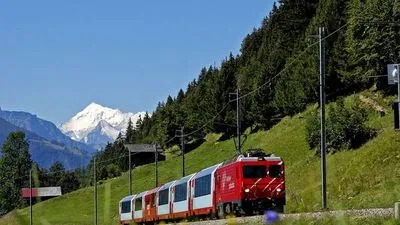
You'll leave by coach from Basel for Lauterbrunnen (an approximate 2.5-hour drive), known for its breathtaking scenery and natural beauty. From there, you'll board the rack railway that will take you through the Eiger and Mönch mountains to Europe’s highest railway station. The railway, inaugurated in 1912, climbs steadily through the spectacular scenery in the Swiss Alps. Breathtaking views of snow-capped summits, majestic glaciers, and verdant valleys await. The apex of this excursion is Jungfrau Station. Perched at an altitude of over 11,000 feet (3,454 meters), the station offers astonishing views of the Great Aletsch Glacier and surrounding peaks. The train ride is an unforgettable experience combining adventure, nature, and remarkable engineering. Enjoy a specialty at a restaurant for lunch. For your return, you'll take the train to Eigergletscher Station, where you'll board a gondola lift to Grindelwald Terminal. This will be another moment to take in the exceptional views of the Alps. After you arrive in Grindelwald, you'll return to Breisach by coach (an approximate 3.5 - to 4-hour drive). PLEASE NOTE The order of the visits can change Times are approximate Dress for the weather! During your journey to Jungfraujoch–Top of Europe and the highest train station on the continent, you will reach an altitude of over 11,000 feet (3,454 m), which is high-mountain territory. Winter-like temperatures under freezing (32° F/0° C) are frequent in summer, and the weather can change very quickly. Basic equipment for this excursion includes a jacket, closed-toe shoes, gloves/mittens, hat, scarf, and sunglasses to protect your eyes from the high-altitude sun. We also recommend eating a hearty breakfast and carrying one bottle of water per person. What are the medical precautions to consider when traveling by train through the Jungfrau Region? Trains allow for quick transportation to the higher altitudes. As the train climbs higher, the air pressure drops and, consequently, the oxygen level does as well. People in good health can adapt to the rapid increase in medium altitudes and high altitudes up to 13,100 feet (4,000 meters) without any adverse effects. Severe altitude sicknesses (altitude edemas) appear, at the earliest, after 6 to 12 hours at altitudes of over 8,200 feet (2,500 meters).Therefore, altitude sickness is unlikely during our short stay at the Jungfraujoch. Nevertheless, do not set out on high-altitude journeys unless you feel like you're in perfect health. High altitudes can be risky for certain heart, lung, vascular, and blood diseases. Medical advice is recommended under certain circumstances. For babies and children, please consult your pediatrician if you have any doubts.