
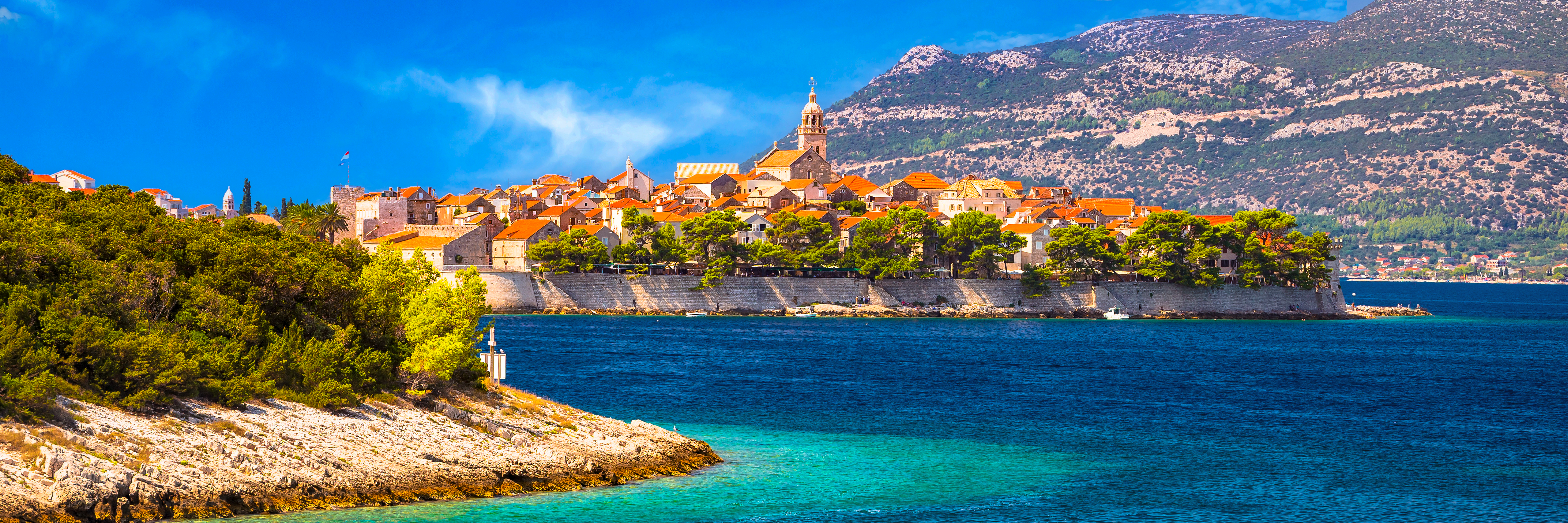
The Adriatic, to the rhythm of the islands and the winds
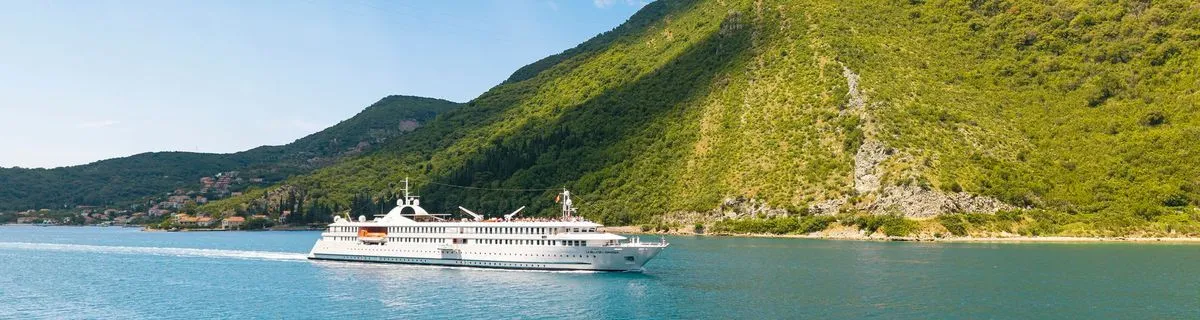
Along the Dalmatian coast, La Belle de l’Adriatique sails from island to island and town to town. Where other ships cruise offshore, she stays as close to the coastline as possible. From iconic destinations to off-the-beaten-path discoveries, embark on a week-long cruise through the land of the Big Blue. A travelogue… as if you were already there.
1 – Dubrovnik Below!
For passengers arriving by air, the exploration of the Dalmatian coast begins long before boarding the ship. The final half-hour of the flight offers a first glimpse of the week ahead. On one side of the aircraft, white limestone cliffs stretch into the distance, with mountains further inland dotted with patches of green that gradually fade and turn golden as the seasons pass. On the other, a stunning palette of blues, where the eye can hardly distinguish between the sky, the sea, and the horizon.
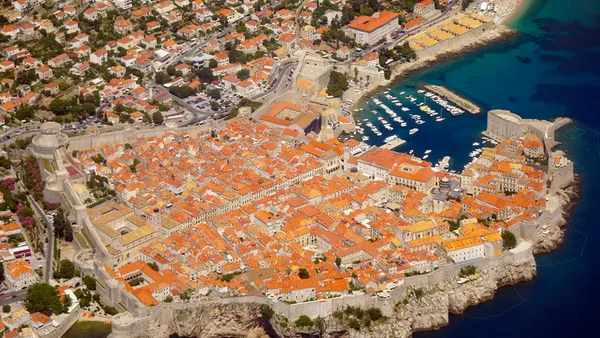
One bay follows another. The weather conditions are perfect, and the captain treats us to a breathtaking gift. There’s no mistaking it, far below lies Dubrovnik. An unforgettable sight. From above, the fortified city seems to rest upon the water, its ochre rooftops fitting together with the precision of a goldsmith’s work in a dense mosaic shaped by history and time.
The airport is only about 15 kilometres from the city. To reach the port, we follow the Jadranska Magistrala, the spectacular coastal highway that winds its way toward Istria, weaving between the rocky cliffs high above the sea. From here, too, the view of Dubrovnik, which we skirt along the way, is simply magnificent.
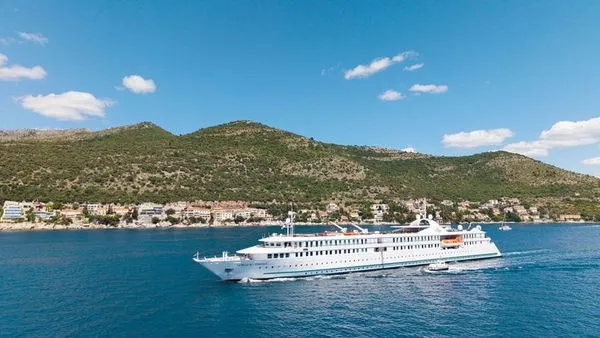
Here we are at the port, beneath the spectacular Franjo Tuđman Bridge, the elegant cable-stayed bridge named after the first president of independent Croatia (1990–1999). Neatly moored alongside the giants of the sea, La Belle de l’Adriatique seems almost tiny. We don’t know it yet, but this human-scale ship will take us to places that remain out of reach for the larger vessels towering above it.
2 – Dubrovnik, a pearl and a few hidden gems
Dubrovnik proudly calls itself the Pearl of the Adriatic. While visitors should always take tourist slogans with a pinch of salt, this one rings true. With its palaces, churches, and monasteries, the ancient city of Ragusa resembles a vast open-air museum.
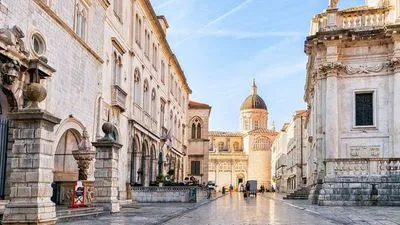
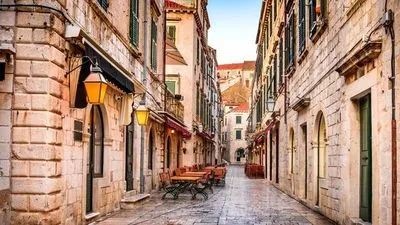
Having endured six months of bombardment during the breakup of Yugoslavia in the early 1990s, the city still carries the memory of those difficult days. Yet it reveals almost nothing of its scars. Dubrovnik has reclaimed its place in the sun, as though untouched by history. Sunlight glides across the ochre rooftops and reflects off the gleaming limestone of the Stradun, the city's main street, polished smooth by centuries of footsteps as much as by the Mediterranean sun. All around, the deep blue of the Adriatic appears unexpectedly, framing every alley and square. The colours do not merely coexist, they enhance one another.
Exploring Dubrovnik is best done at a leisurely pace. Lose yourself in the maze of narrow streets, stairways, and artisan shops enclosed within the impressive 2-kilometre-long city walls, which today offer one of the most spectacular walks in Croatia.
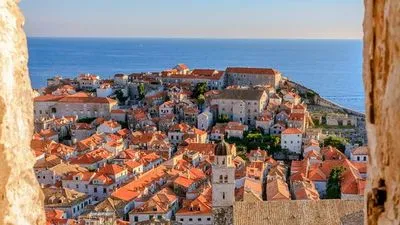
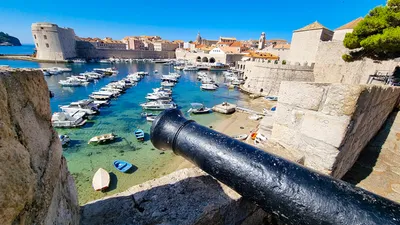
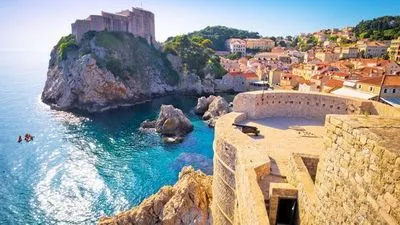
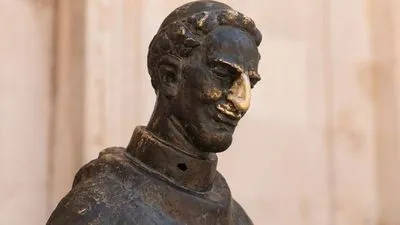
Every street corner seems ready to reveal a story or uncover a hidden secret. Here stands one of Europe's oldest pharmacies, founded in 1317. There, tradition invites you to rub the nose of Marin Držić, little known beyond Croatia, yet considered the greatest playwright of the Dalmatian Renaissance, for good luck. Whether you believe the legend is entirely up to you.
One of the city's most beloved figures is the traditional "heart seller," dressed in regional costume and offering the iconic *licitar* hearts that have become a symbol of Croatia. This picture-perfect setting has also captivated filmmakers.
The hit series Game of Thrones transformed Dubrovnik into King's Landing, capital of the Seven Kingdoms. With so much beauty bathed in Mediterranean sunshine, it's easy to see why this city feels suspended somewhere between history and fantasy.
3 – The peaceful island of Mljet
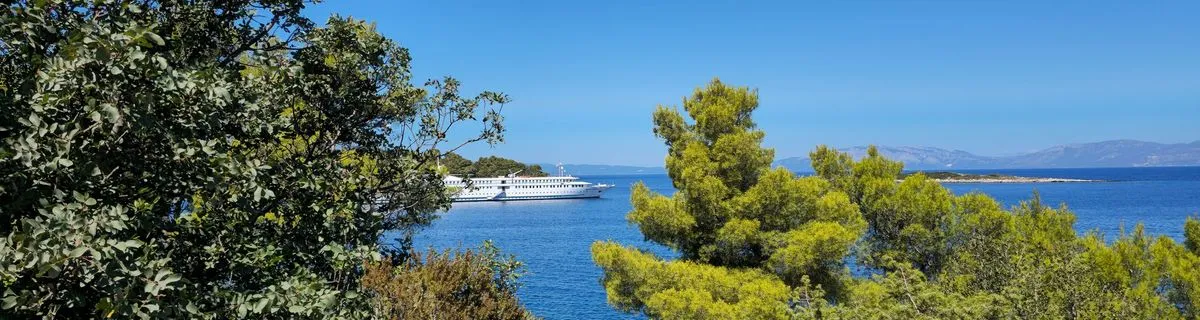
Early in the morning, the island of Mljet appears on the horizon. Even La Belle de l’Adriatique must anchor offshore, as there is no deep-water port here. The final approach is made aboard small boats that gently glide toward the island.
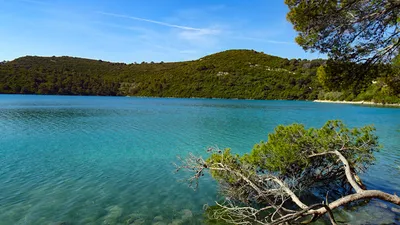
In June, the little harbour exudes tranquillity. A handful of people wander along the waterfront, the morning sun already warming the air, and there is that rare sensation of having the world almost entirely to yourself. Barely a thousand people live on this long, narrow island, 37 kilometres in length and only 3 kilometres wide. Many residents spend most of the year on the mainland, returning only for the summer season. Even the bicycle rental shops remain quiet. Once beyond the harbour, cars disappear altogether. Reaching the small pier leading to the lake and monastery requires a pleasant walk of less than half an hour beneath fragrant pine trees, their needles filtering the sunlight into a soft golden glow. The path eventually opens onto the peaceful lakeshore and the monastery beyond.
Such serenity feels almost unreal.
Yet it is exactly what one would expect in a protected natural paradise. Mljet National Park was established in 1960, ironically during the years when Marshal Tito, the influential leader of communist Yugoslavia (1945–1980), maintained a residence on the island. Time and power can change people. The former partisan leader had developed a taste for luxury, and local stories tell of how the monks' old mill system was dismantled to widen a canal so that the president's yacht could pass through. Today, only memories, and a few scattered stones, remain from that era.
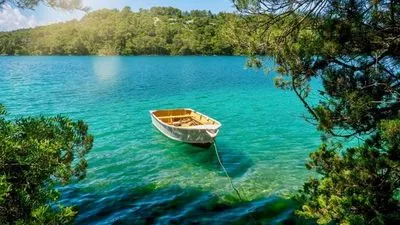
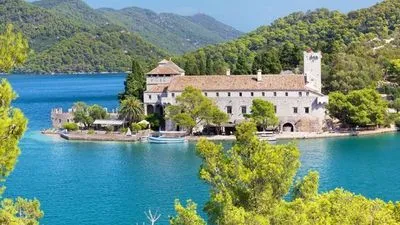
Surrounded by forested hills and resting on a tiny island in the middle of a crystal-clear lake, the Benedictine Monastery of St. Mary is the very definition of peaceful. Some visitors swim in the tranquil waters, while others enjoy a quiet coffee on the terrace. Here, among the pines and far removed from the outside world, time itself seems to stand still.
4 – Hvar, Vis, Korčula… A sea scattered with islands
How many islands are there in the Adriatic Sea? The question lingers like a riddle. Depending on who you ask, the answer ranges from 1,200 to 1,400. In truth, the exact number hardly matters. What truly counts is the endlessly changing horizon, where sea and land blend into a mosaic of islands. It is as though, like Tom Thumb, someone had scattered them across the surface of the water.
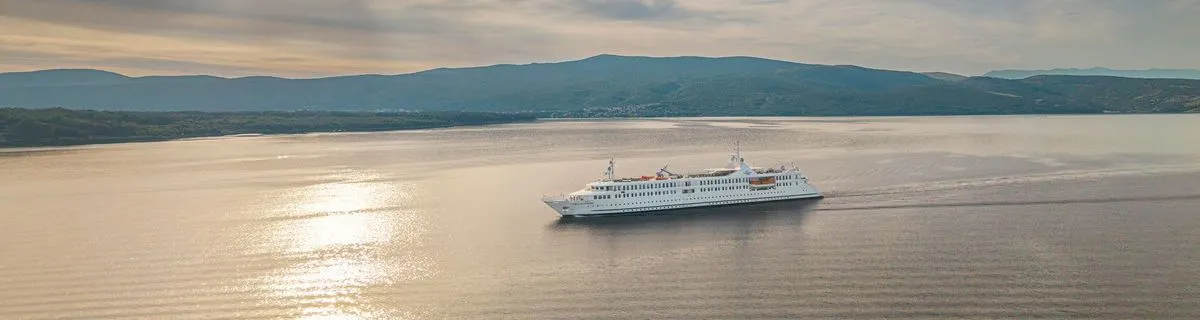
Against this ever-changing backdrop, La Belle de l’Adriatique glides effortlessly. At just 110 metres long and 12 metres wide, her modest size allows her to navigate channels and harbours that are inaccessible to larger ships. While others remain offshore, she brings you into the heart of the landscape.
Each island has its own story to tell.
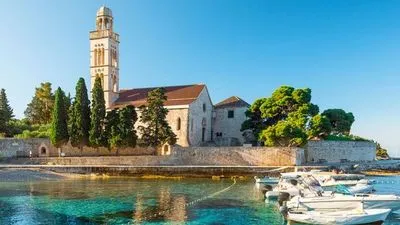
In Hvar, the Franciscan Monastery houses a remarkable painting of The Last Supper. The artist gave Christ and the apostles the faces of the patrons who financed the work. Naturally, no one volunteered to be Judas, so the traitor is depicted with his back turned, a renegade to the very end.
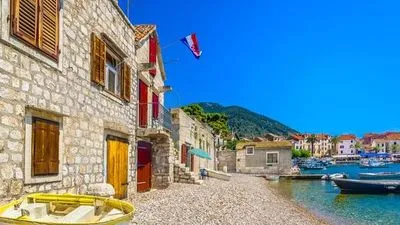
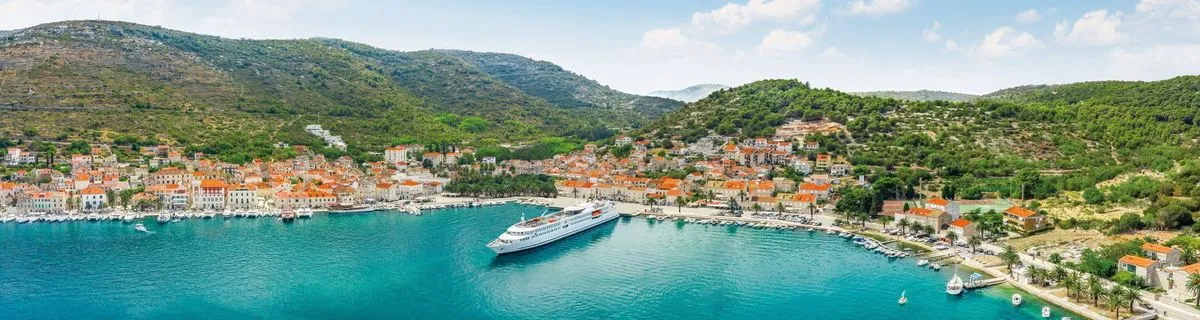
Further along, Vis offers a completely different atmosphere: a sun-drenched bay, narrow streets descending gently toward the sea, and the quiet charm of a place that slows your pace without you even noticing.
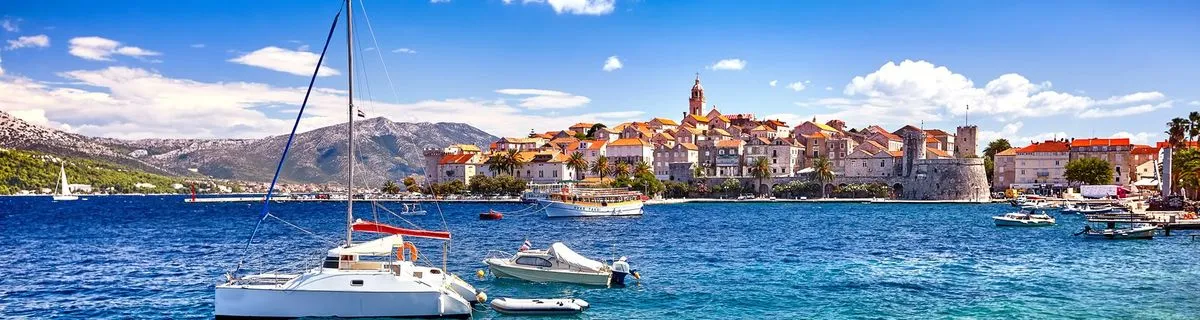
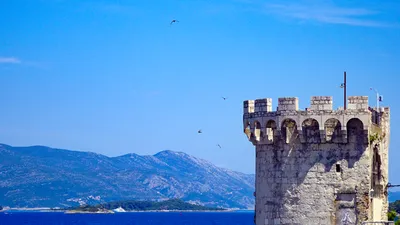
Then comes Korčula, its streets carefully laid out to shield the town from the wind. Everything seems thoughtfully planned and perfectly aligned. Yet legend has also found a home here. According to local tradition, Marco Polo was born in Korčula. Is it true? The museum certainly says so, and the souvenir shops happily repeat the tale. But isn't that part of the magic of the sea? Every voyage is enriched by the stories we choose to believe.
5 – Krka: The more beautiful the waterfalls…
Just 13 kilometres and a 15-minute drive away, the scenery changes completely. For the first time during the cruise, an excursion takes us inland by coach.
Leaving Šibenik, the first city in the world to be powered by alternating current in 1895, we head toward Krka National Park. As the road winds through the countryside, the distant roar of the waterfalls reaches us before they come into view. Visitors do not simply enter Krka, they become immersed in it.
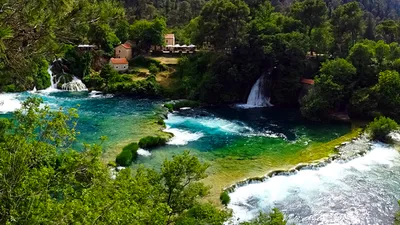
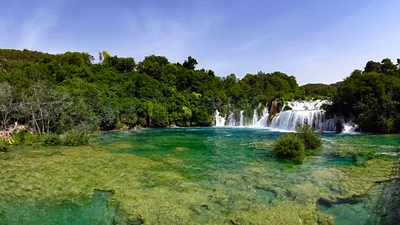
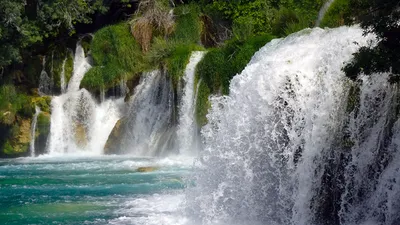
From the very first viewpoints, spectacular waterfalls tumble over the fragile karst landscape sculpted by the Krka River. Water seems to burst from every direction, cascading over natural travertine barriers formed over thousands of years by mineral deposits.
A network of wooden footbridges stretches for nearly 2.5 kilometres, revealing new wonders at every turn. A rustle in the undergrowth may signal the passing of an otter. Delicate blue dragonflies hover in shafts of sunlight, while perfectly camouflaged toads remain almost invisible. Above it all, hundreds of birds fill the air, their songs blending into the constant roar of the waterfalls.
Covering more than 100 square kilometres, Krka National Park is home to seven magnificent waterfalls, each with its own character. Skradinski Buk is the best known, an immense amphitheatre of cascading waters nearly 45 metres high. Roški Slap is perhaps the most poetic, its interwoven streams earning it the nickname "the necklace." Manojlovac, meanwhile, is the tallest, plunging almost 59 metres. Together, they create one of Croatia's most spectacular natural displays.
6 – Split: A city within a palace
In Split, as in Trogir, Šibenik and throughout the islands, La Belle de l’Adriatique docks right in the heart of town. Step ashore, lace up your walking shoes, and the city is yours to discover. And what a city it is!
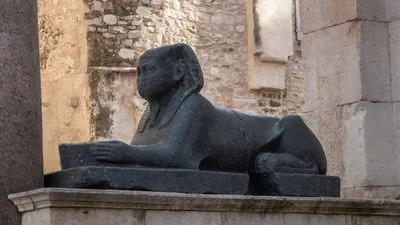
At its centre, an ancient Egyptian sphinx carved from black granite quietly watches over the elegant Corinthian columns of what was once an imperial mausoleum and is now a Christian cathedral. Exploring Split feels like travelling through time. Here, the centuries overlap so seamlessly that the boundaries between ancient Rome and modern Croatia seem to disappear.
On this sunny Saturday in June, the city is full of life. The Peristyle, once the ceremonial courtyard of the palace, is alive with wedding processions, lively cafés and Roman centurions in costume happily posing for photographs with visitors.
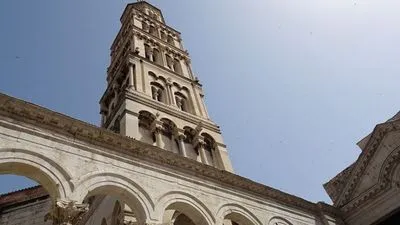
For nearly 1,600 years, the historic centre has flourished within the walls of the immense palace built for Emperor Diocletian, one of Rome's last and most feared emperors. Constructed in the early 4th century and covering some 38,500 square metres, the palace became the refuge of a ruler remembered as much for persecuting Christians as for his architectural ambition.
Over the centuries, the city gradually absorbed the palace. Ancient walls became the foundations of houses, shops and cafés. Roman façades stand beside medieval buildings, while Diocletian's own mausoleum was transformed into the Cathedral of Saint Domnius, a remarkable twist of history.
Today, medallions depicting Diocletian and his wife stand only a few steps from altars dedicated to Christian martyrs such as Saints Domnius and Anastasius. History, it seems, has a wonderful sense of irony.
7 – The Bay of Kotor Will Leave You Speechless
Before concluding its Dalmatian journey, La Belle de l’Adriatique briefly leaves Croatia behind and sails south toward Montenegro. During the night, the ship crosses the Adriatic, and by late morning the breathtaking Bay of Kotor comes into view.
Surrounded by towering mountains, the vessel glides deeper into what is often described as Europe's southernmost fjord, though it is, in fact, a submerged river canyon. Stretching nearly 28 kilometres, the bay unfolds through a succession of peaceful basins linked by narrow channels.
Just before entering the Verige Strait, a dark opening carved into the mountainside appears on the starboard side. This mysterious tunnel is the remains of a former Yugoslav submarine base, hidden within the rock and now abandoned. Passengers naturally gather on deck as the spectacular scenery slowly reveals itself.
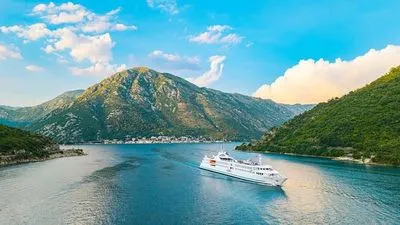
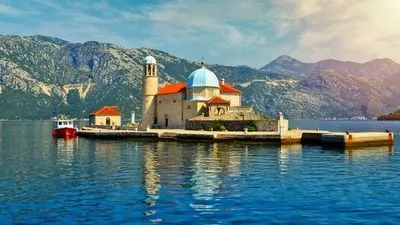
Further on lies the enchanting islet of Our Lady of the Rocks, created by sailors during the 15th century after, according to legend, an icon of the Virgin Mary was discovered there. Its elegant church, crowned by a blue dome, remains one of Montenegro's most iconic landmarks.
At the very end of the bay sits Kotor, a small medieval town of around 20,000 inhabitants. Sheltered by dramatic mountains, it is enclosed by impressive fortifications that climb the hillside like ivy, reaching nearly 300 metres above the old town.
The adventurous can tackle the 1,300 stone steps leading to the fortress above, allow about an hour for the climb, or opt for the modern cable car, opened in 2023, which rises to Mount Lovćen at an altitude of 1,350 metres. However you reach the summit, the panoramic view is unforgettable.
Before returning to Dubrovnik for the final time, the Bay of Kotor leaves every visitor with the same feeling: speechless.
8 – The Filipino Show
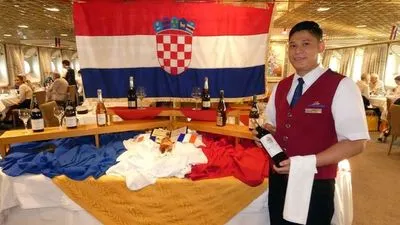
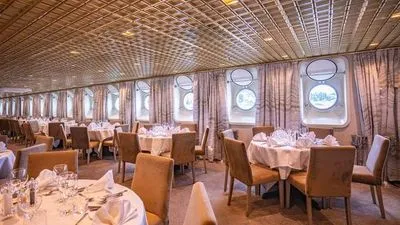
The smiles are always there. But on this particular evening, dinner service finishes just a little faster than usual. Soon afterwards, the bar closes its doors, for only a few minutes, of course. There is no question of leaving the ship's 195 passengers without a drink. Behind the scenes, the 47-member crew is busy preparing for something special. While navigation is entrusted to Croatian officers and sailors who know the Adriatic like the back of their hand, every aspect of life on board, from housekeeping and restaurant service to the bar, is looked after by a dedicated Filipino crew.
Tonight, they trade their uniforms for costumes. The bartender becomes Michael Jackson. A cabin stewardess transforms into Diana Ross. Others sing, dance and perform with infectious enthusiasm. The transformation is remarkable.
As tradition dictates, the finale brings everyone together on the dance floor. Passengers and crew celebrate side by side to the sounds of Tagalog, the best-known of the Philippines' more than 170 languages.
Beyond the destinations themselves, the finest journeys are always those shared with the people who make them unforgettable.

Author

Philippe Marcacci
Journalist Philippe Marcacci knows CroisiEurope's ships and destinations exceptionally well, having accompanied many of the company's cruises over the years.
Discover La Belle de l'Adriatique
Explore our Adriatic Cruises
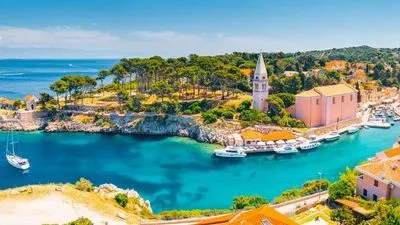
Stop in DUBROVNIK - ZADAR - KRK - RAVENNA - ROVINJ - PULA - BRAC - DUBROVNIK
Embark on an unforgettable cruise along the Adriatic, passing fortified cities, lush islands, and spectacular coastlines. Discover majestic Dubrovnik, its medieval walls, and breathtaking panoramas before sailing to Zadar and the Plitvice Lakes National Park. Explore the island of Krk and its islet of Košljun, stroll through the colorful streets of Rovinj, admire Pula’s ancient amphitheatre, and be enchanted by Ravenna’s Byzantine mosaics. The island of Brač reveals its hilltop villages, ancient quarries, and exceptional vistas. With authentic excursions, cultural experiences, and scenic sailing, this cruise offers a unique immersion in the heart of the Mediterranean.
See cruise details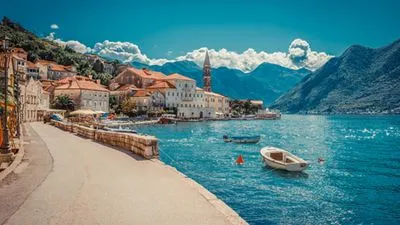
Stop in DUBROVNIK - MLJET - KORCULA - SIBENIK - TROGIR - SPLIT - VIS - HVAR - KOTOR - DUBROVNIK
Enjoy a breath-taking journey throughout the beautiful landscapes of Croatia and Montenegro, in which you will discover beautiful cities as well as places where nature is queen. Dive into the striking beauty of the Dalmatian coast, stroll through Dubrovnik "the pearl of the Adriatic", Trogir, Hvar, Korcula or Kotor, as well as the national parks of Mljet and Krka.
See cruise details