
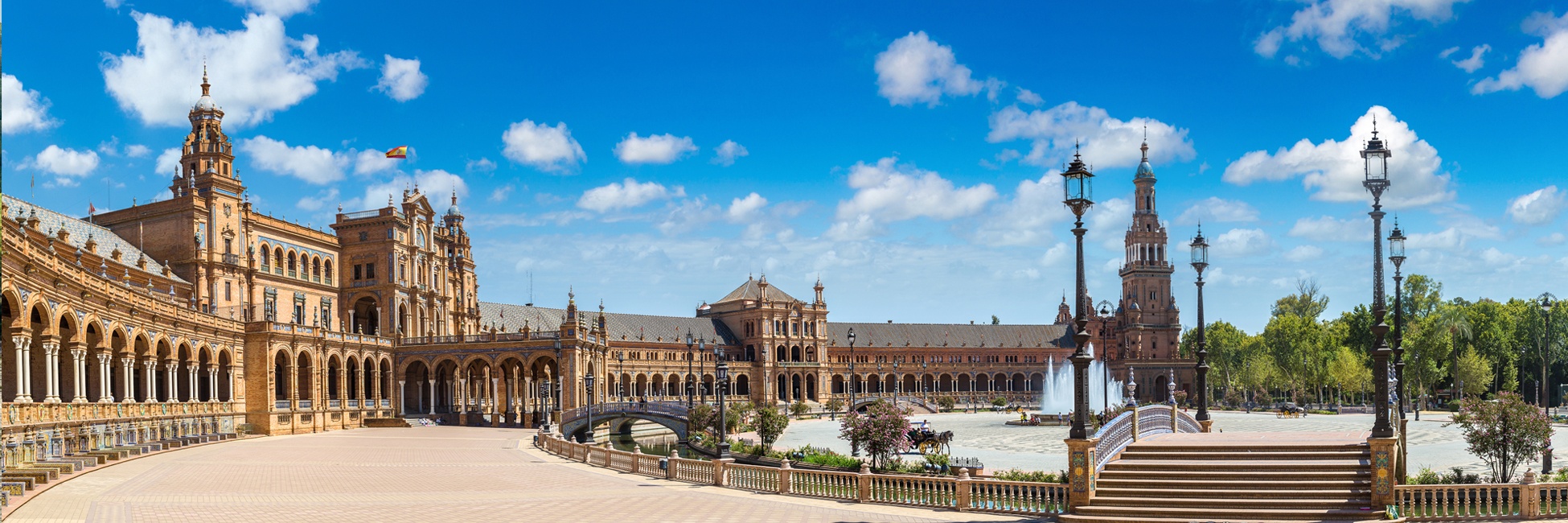
Guadalquivir and Guadiana Rivers (Spain)
The Guadalquivir Valley: land of sun, perfume of Orient...
For Arab poets, Andalusia was "the land on the brink of paradise". Fierce flamencos, bullfights and the perfume of Islam, are not enough to summarize the southernmost of the Spanish provinces. In Andalusia, no city is like any other. The Guadalquivir which crosses from east to west reflects all its contrasts between snow-covered sierras, deserts worthy of the Wild West and white beaches flooded with sun.
The Arab "big river"
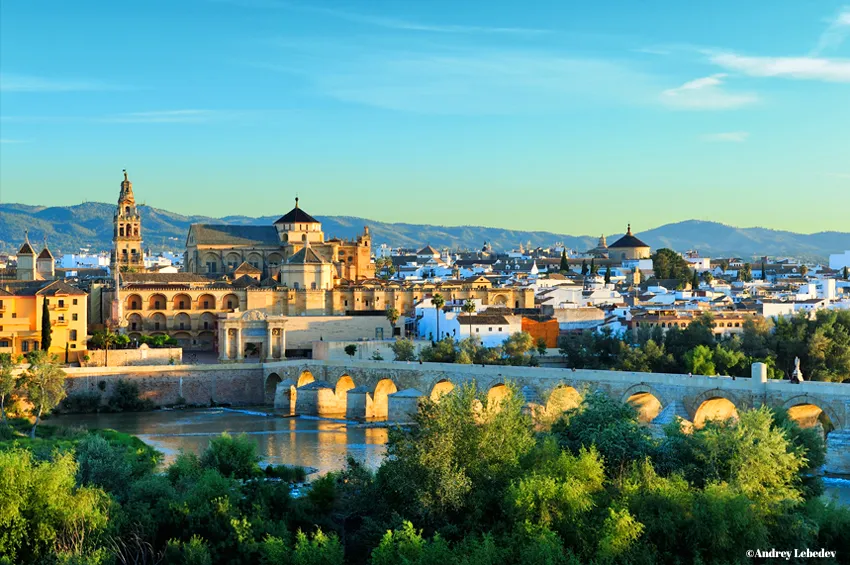
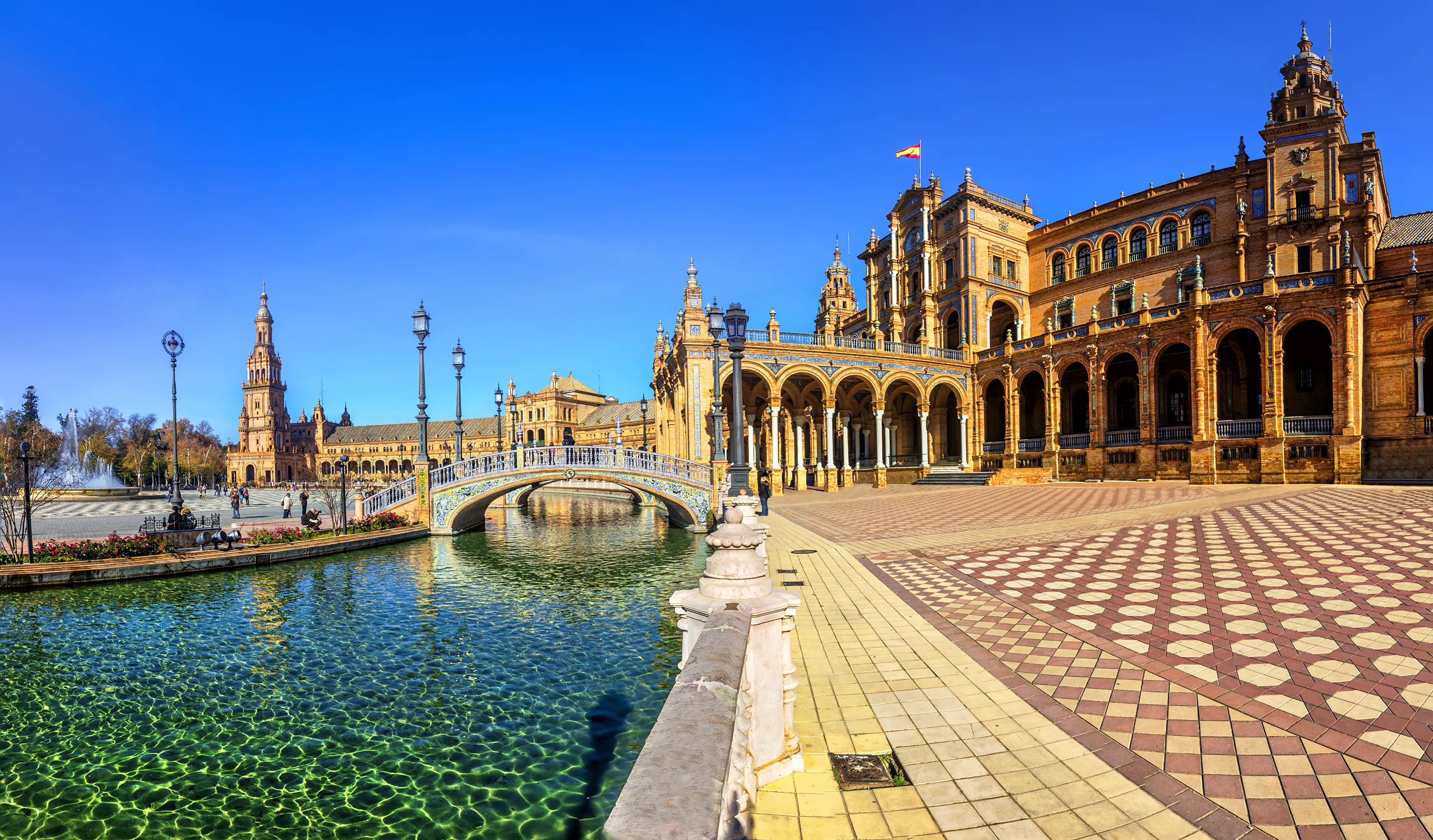
The name Guadalquivir comes from Wadi el-Kebir which means "great river" in Arabic. 602 kilometres long, its source is in the Sierra de Cazorla and it flows into the Atlantic Ocean (Gulf of Cadiz) near Sanlucar de Barrameda. The south of the Guadalquivir Valley, from Seville to Cordoba is called "campina" (the countryside). This plain covered with cereals, cotton fields, vineyards and olive groves, is punctuated by large villages. Shortly before Seville, the succession of low hills of Los Alcores marks the entrance to the eastern part of the valley where fighting bulls are bred. Beyond Seville, the Guadalquivir crosses a marshy area called Las Marismas. Fuelled by rainwater in winter and snow melt from the Sierra Nevada in summer, the river maintains a steady flow throughout the year, allowing irrigation and hydroelectric power generation. During the occupation of Spain by the Moors in the Middle Ages, the Guadalquivir was navigable to Cordoba.However,because of the gradual accumulation of sediments, today it is only navigable up to Seville, a distance of about 80 kilometres.
Seville "the Joyful" and Cordoba "the Dreamer"
The richness of the valleys around the Guadalquivir and the water that descends from the heights of the Sierra Nevada allowed architects to build palaces and gardens of great beauty and remarkable harmony. Andalusia remained Muslim for seven centuries. It saw the birth of an art marked by the origin of its occupants, the Umayyad dynasty of Syria first, then the Arabs of North Africa. But conquered by Spain in 1492 and enriched by the gold that came from America, it quickly personalized its style through Gothic art, Renaissance or Baroque. It occupies the beginnings of the Spanish art scene in the seventeenth century. Seville and Cordoba are the most beautiful witnesses of the "Golden Age".
Zoom on radiant stops..
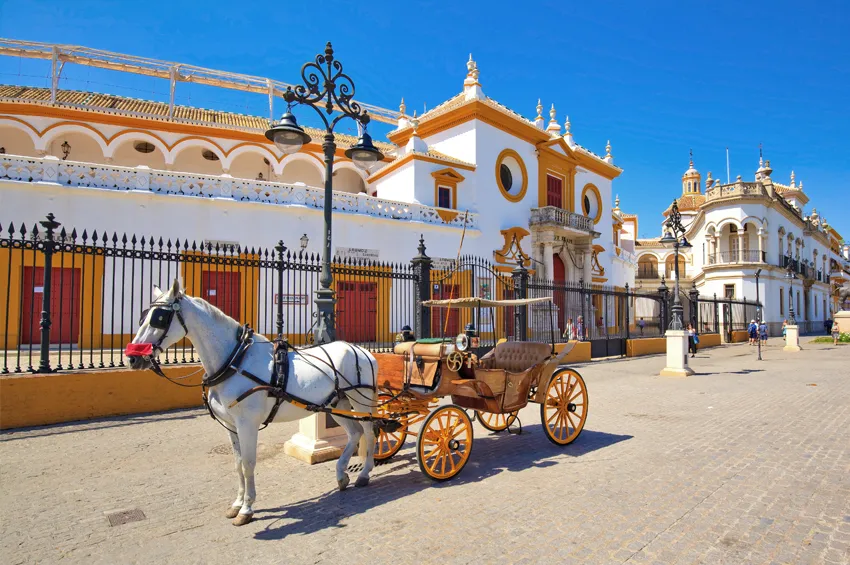
Seville, fourth city of Spain with 700,000 inhabitants, joyful and colourful, lives to the rhythm of festivites, bullfights and exalted processions of Holy Week. Its wealth and its attractions are innumerable: between the old minaret of Giralda, the Cathedral, the Museum of the Beaux Arts, the old district of Santa Cruz, jostle the memories of the Arab sultans, the first Christian kings, the great discoveries and renown painters. It seems that we eat the best tapas of Andalusia, ham or seafood, standing in crowded bars all night. The expo'92, which commemorated Columbus' discovery of America in 1492, gave it an economic boost with 20 million visitors in six months. On this occasion, it had new magnificent infrastructures such as an airport, a new opera house and two monuments of great elegance: the Santa Justa train station and the Alamillo bridge. On the site of the expo'92 is also the Pavilion of Navigation with its watch tower and the replica of the Victoria, Ferdinand Magellan’s carrack.
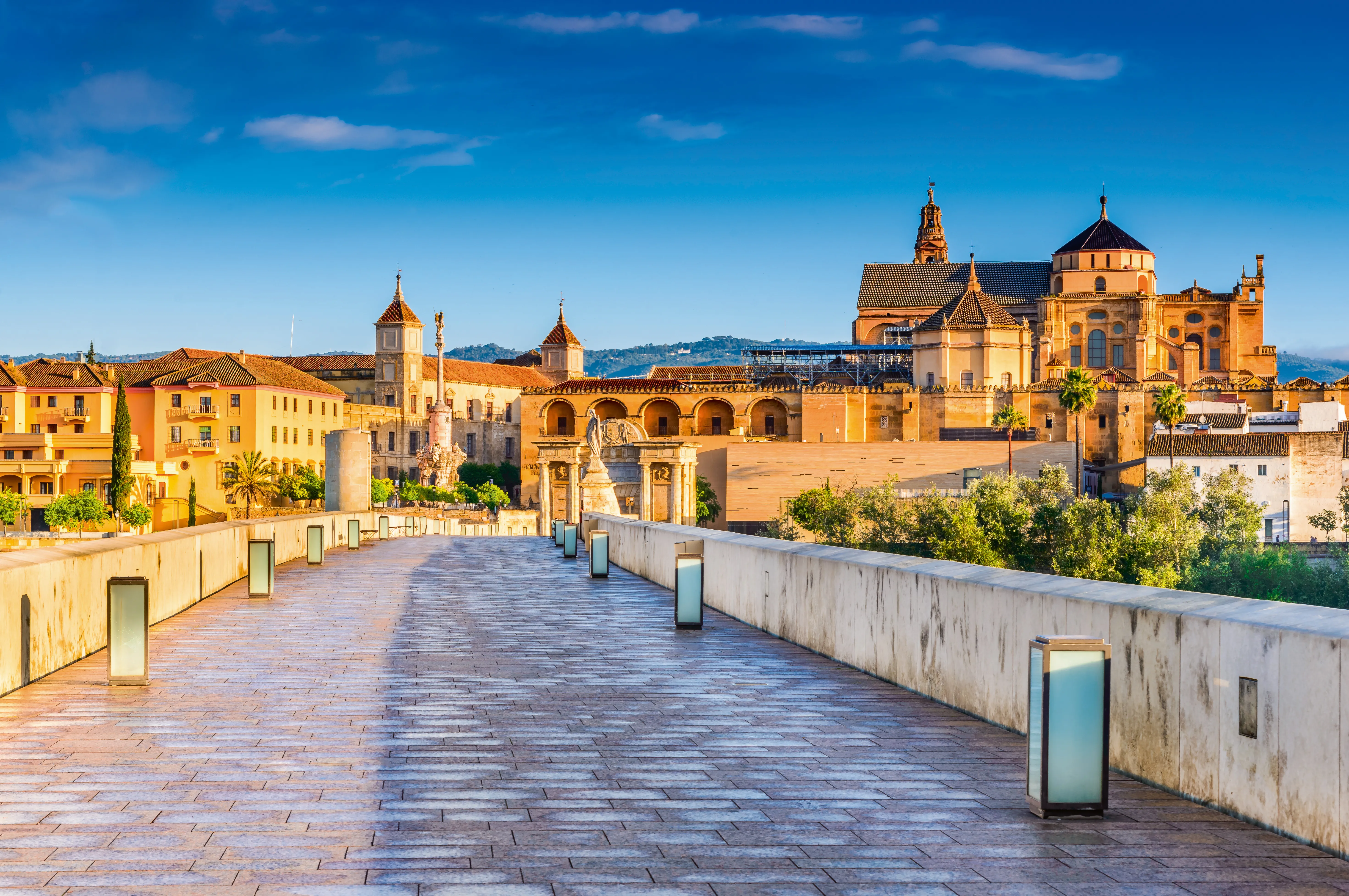
At the edge of a meander of the Guadalquivir, Cordoba, more dreamy, reflects the bewitching charm of the Orient. With its great mosque, an essential monument of Muslim architecture and a masterpiece of art history with its 850 columns, it is the most beautiful medieval city in Spain. Closer to the coast, Jerez with its opulent and lively commune has been enriched by the trade of its wine: xérès, in French, sherry in English so loved by the Anglo-Saxons. It is also the capital of equestrian art thanks to its Royal School and the birth-place of flamenco singing.
Cadiz, on the Costa de la Luz, is a rock in the middle of the sea only attached to the continent by a narrow isthmus. Fascinating with its narrow streets, its large flowered squares built in the eighteenth century, its wall overlooking the ocean, is nicknamed the "Tacita de plata" which means little silver mug in Spanish. It also imposes itself by its economic development which makes it one of the densest cities of Andalusia. According to legend, the beautiful Cadiz was founded by Hercules .... The other rock is Gibraltar, a piece of Britain stranded in the Mediterranean Sea that offers a panoramic view of the bay of Algeciras and the African coast. Sanlucar de Barrameda is at the forefront of this show, full of magic. Taken between the sea on one side and the vineyards that thrive on white ground on the other, the port remembers Christopher Columbus who cast off to America, Magellan a few years later who started his long journey around the world here too.
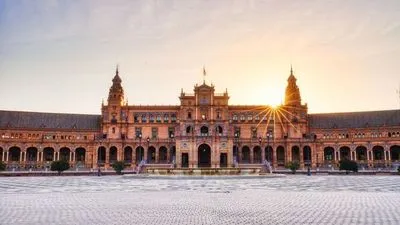
Stop in SEVILLE - Cordoba - SEVILLE - CADIZ - EL PUERTO DE SANTA MARIA - SEVILLE - Granada - SEVILLE
From Seville to Granada, this cruise will allow you to visit the cities and emblematic sites of this rich region of Spain. Discover Seville, the capital of Andalusia, which is full of joy and activity throughout its streets. You will be amazed by the old town which is home to amazing architecture and tradition. But also, by Jerez which has preserved an incredible architectural heritage. In addition to these cultural discoveries, enjoy an exceptional and magical experience with the observation of the partial solar eclipse, a rare celestial spectacle in the heart of Andalusia.To extend the magic, a meteor shower will illuminate the Andalusian sky, offering an unforgettable end to the evening.
See cruise details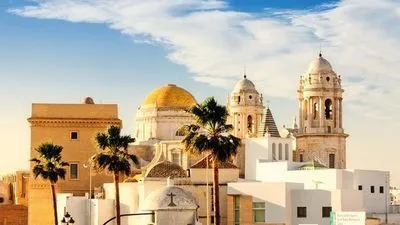
The Jamón Ibérico Route and the Pueblos Blancos - Amazing Andalusia: Enchanting Traditional Architecture and Fabulous Cuisine (port-to-port cruise)
Stop in Seville - Jerez de la Frontera - The Pueblos Blancos - Jerez de la Frontera - Jamón Ibérico Route - SEVILLE - CADIZ - EL PUERTO DE SANTA MARIA - SEVILLE
Discover Spanish culinary culture on a trip through the Jabugo region, where one of the most famous hams in the world is produced. Learn about how pigs are raised and the long curing process involved in making this delicacy. After this scrumptious jaunt, we'll complete our picture-perfect postcard day with a visit to the Pueblos Blancos, a myriad of villages dotted with whitewashed homes. The contrast of colors between the homes, mountains, and flowers within the idyllic landscape is something to behold. A cruise will then give you a glimpse of Andalusian culture enhanced by tasting local products.
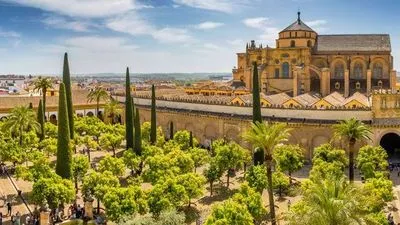
Stop in SEVILLE - Cordoba - SEVILLE - CADIZ - EL PUERTO DE SANTA MARIA - ISLA MINIMA (3) - SEVILLE - Granada(1) - SEVILLE
Andalusia, the iconic region in southern Spain, is truly the cradle of Spanish culture, rich with a fascinating historical and architectural heritage. Its cultural diversity, shaped by centuries of different civilizations, makes this land a genuine treasure waiting to be explored. On this cruise, you will discover the architectural and artistic gems of Seville, Córdoba, Granada, Cádiz, and more. Through guided tours of the most emblematic sites—from the Alcázar of Seville to the Alhambra of Granada, including the Mosque-Cathedral of Córdoba, the Palace of Las Dueñas, and Casa de Pilatos—you will immerse yourself in a world where Moorish, Baroque, and Renaissance influences intertwine. These moments of discovery will be complemented by convivial gatherings on board, a mesmerizing flamenco show, and tastings. It’s a unique opportunity to experience the artistic soul of Andalusia while enjoying moments of relaxation in historical sites of timeless beauty.
See cruise details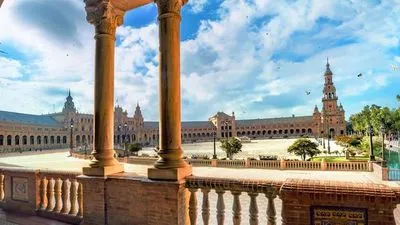
Stop in SEVILLE - CADIZ - EL PUERTO DE SANTA MARIA - SEVILLE
Seville—an exemplary city in Spanish history, where Christian and Muslim cultures have cohabited in veritable peace in the past—contains impressive architectural wonders such as the Palacio de las Dueñas. A captivating tour of the Pueblos Blancos in Andalusia. Vejer de la Frontera, a hilltop town with whitewashed homes. A glimpse of Andalusian culture enhanced by a tasting of local products.
See cruise details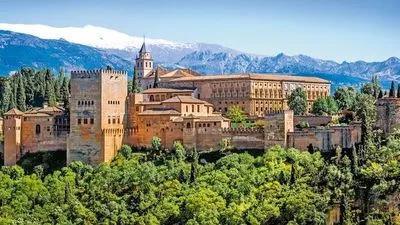
Stop in SEVILLE - Cordoba - SEVILLE -EL PUERTO DE SANTA MARIA(2) - Jerez - CADIZ - HUELVA - SEVILLE - Granada - SEVILLE
Travel to the heart of Andalusia. Along the Guadalquivir discover the town of Cordoba, which combines perfectly history and modernity. Visit Seville and its Alcázar palace, an astonishing mix of architectural styles. Then be carried away by the sublime city of Granada which offers a multitude of magnificent sites to visit. You will be dazzled by the beauty of its cathedral which houses the tomb of Christopher Columbus.
See cruise details